RF
Microneedling
What is RF
Microneedling?
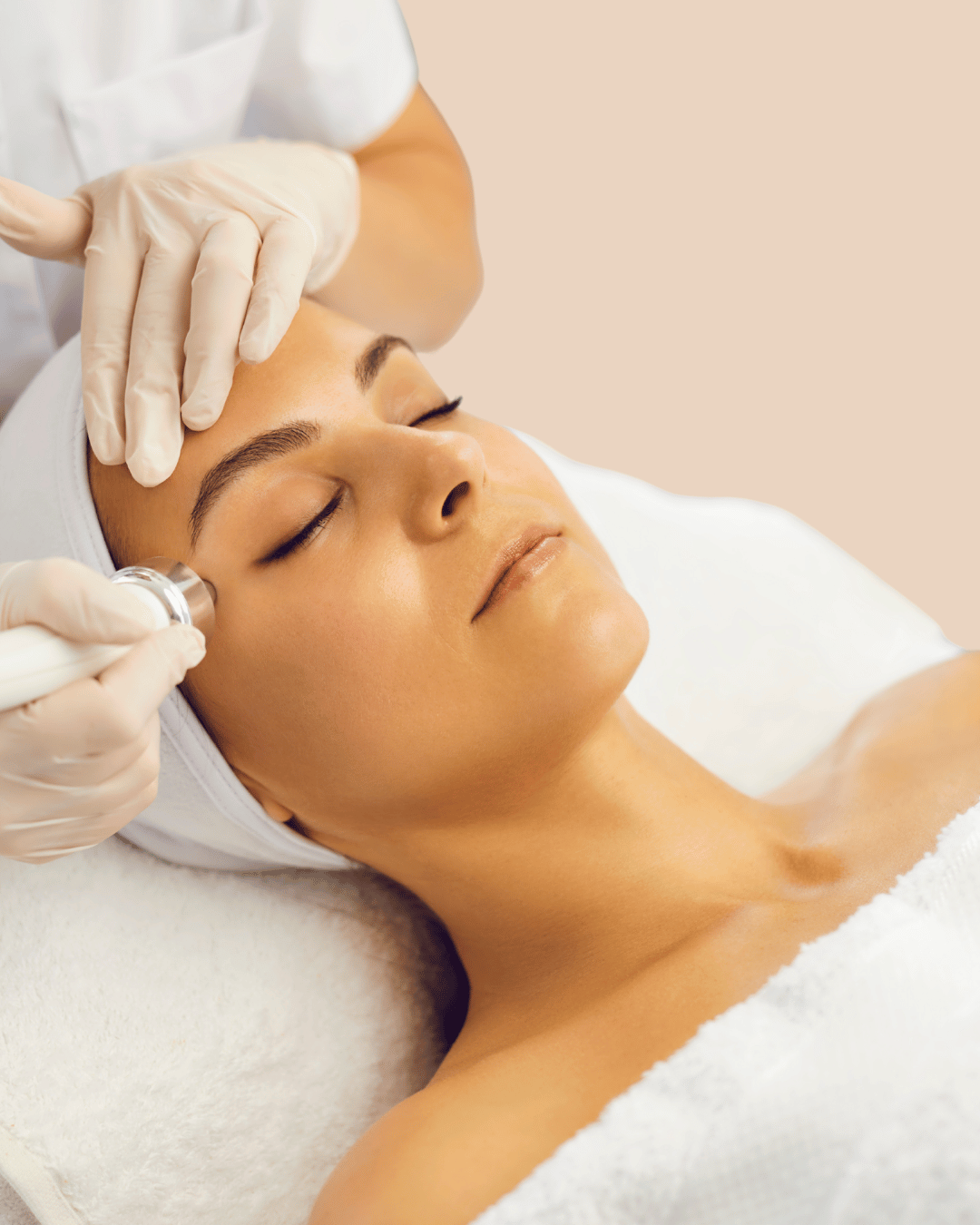
Radiofrequency microneedling is an advanced skin rejuvenation treatment that combines two proven mechanisms — mechanical microneedling and targeted radiofrequency energy delivery — into a single, synergistic procedure. Fine insulated needles penetrate the skin to a precisely controlled depth, releasing RF energy directly into the dermis at the point of insertion. This dual stimulus triggers an intensive collagen remodelling response deep within the skin, producing measurable improvements in skin laxity, texture, pore size, fine lines, and acne scarring — all without ablating the surface.
At The Face Institute, RF microneedling is performed using medical-grade platforms with fully insulated needle arrays — ensuring that the RF energy is deposited precisely within the dermis while leaving the overlying epidermis intact. This epidermal sparing approach makes the treatment suitable for a wider range of skin tones than ablative lasers, with significantly less downtime and a lower risk of post-inflammatory pigmentation changes.
RF microneedling occupies an important position in our non-surgical offering — delivering genuine structural improvement with minimal recovery, and serving as an excellent maintenance treatment between surgical procedures or for patients who are not yet ready to consider surgery. A course of treatments produces progressive, cumulative collagen remodelling that continues to improve for months after the final session.
Why Choose This
Treatment
RF microneedling delivers genuine dermal remodelling and skin tightening across all skin types — with minimal downtime, no surface ablation, and results that build progressively over a course of treatments.
Safe for All Skin Tones
Because the RF energy is delivered beneath the epidermis through insulated needles — leaving the skin's surface largely intact — RF microneedling is safe and effective across the full spectrum of skin tones, including darker complexions where ablative lasers carry a higher risk of pigmentation complications.
Tightens Skin Without Surgery
The thermal energy delivered into the deep dermis and superficial fat causes immediate collagen contraction and triggers a sustained remodelling response — producing visible skin tightening in the lower face, jawline, neck, and periorbital region that accumulates progressively over months.
Refines Texture & Pores
The micro-injuries created by the needling component stimulate superficial collagen renewal, visibly refining skin texture, reducing the appearance of enlarged pores, and improving the overall quality and smoothness of the skin surface with minimal surface disruption.
Effective for Acne Scarring
RF microneedling is one of the most effective non-surgical interventions for atrophic acne scarring — delivering deep collagen stimulation precisely into the scar base, softening tethering, and improving contour and surface texture over a course of treatments.
Minimal Downtime
Unlike ablative resurfacing, RF microneedling leaves the skin surface largely intact — resulting in only 24 to 72 hours of redness and mild swelling. Most patients are comfortable returning to work and social activities within two to three days of treatment.
Progressive Cumulative Results
Each session in a course builds on the last — stimulating fresh collagen synthesis that continues to mature and improve for four to eight weeks after each treatment. The full benefit of a course of three to four sessions is typically seen at six months and lasts up to 18 months.
Before & After
Drag the divider on each case to compare before and after results.
Results vary by individual. All cases presented with patient consent and in accordance with local medical advertising guidelines.
Common
Questions
Have a question not answered here? Bring it to your consultation — our specialists take the time to answer everything, thoroughly and honestly.
Am I a good candidate for RF microneedling?
RF microneedling is one of the most broadly applicable skin treatments available, suitable for patients of all skin types from Fitzpatrick I through VI. Ideal candidates have mild to moderate skin laxity in the face, neck, or periorbital region; visible pore enlargement or uneven texture; atrophic acne scarring; or fine lines that do not yet warrant surgical intervention. It is also an excellent maintenance treatment for patients who have previously undergone surgery and wish to sustain and complement their results. Active skin infections, certain autoimmune conditions, and implanted electrical devices are contraindications discussed at consultation.
How is RF microneedling different from regular microneedling?
Standard microneedling creates mechanical micro-injuries in the skin to stimulate a superficial healing and collagen response — useful for texture refinement and mild scarring, but limited in its depth of effect and tightening capability. RF microneedling adds radiofrequency thermal energy delivered directly into the dermis at the point of needle insertion, triggering a significantly deeper and more powerful collagen remodelling response. The thermal component is responsible for the skin-tightening effect that standard needling alone cannot achieve.
How many sessions are needed and how far apart?
For most concerns, a course of three to four sessions spaced four to six weeks apart is recommended. Each session builds on the collagen stimulus of the last, producing progressive improvement that continues to develop between and after treatments. Some patients with more significant laxity or scarring may benefit from additional sessions. Maintenance treatments every 12 to 18 months are recommended to sustain results long-term once the initial course is complete.
Is the treatment comfortable?
A topical anaesthetic cream is applied to the treatment area for 30 to 45 minutes before the procedure, which renders the skin largely numb. Most patients describe the sensation as a feeling of heat and pressure rather than sharp pain. The most sensitive areas — the bony prominences around the forehead and jawline — may produce more noticeable discomfort, but the treatment is well-tolerated by the vast majority of patients without any additional anaesthetic.
What should I expect after treatment?
Immediately after treatment the skin will appear red — similar to a moderate sunburn — and may feel tight and warm. Small pinpoint marks at needle entry sites resolve within 24 hours. Redness typically subsides over 24 to 72 hours, and most patients are comfortable returning to work and social activities within two to three days. Sun protection is essential from the day of treatment onwards, and active skincare ingredients such as retinoids and acids should be avoided for the first five days.
How does RF microneedling compare to CO2 laser?
CO2 laser resurfacing is a more aggressive treatment that ablates the skin surface — producing greater improvements in pigmentation, fine lines, and surface texture in a single session, but requiring a longer, more demanding recovery and carrying greater risk in darker skin tones. RF microneedling achieves dermal collagen remodelling and tightening without ablating the surface — making it a safer, lower-downtime option that is appropriate for all skin types and suitable for patients seeking meaningful improvement without the commitment of a laser recovery. For patients with significant photodamage, surface texture changes, and perioral lines, CO2 laser remains the more powerful single-session solution; for skin tightening, acne scarring, and broader skin tones, RF microneedling is often the preferred choice.
Can RF microneedling be combined with other treatments?
Yes — RF microneedling integrates well with other treatments in a coordinated skincare plan. It is frequently combined with botulinum toxin and dermal fillers to address the dynamic, volumetric, and structural dimensions of facial ageing alongside the skin quality improvements it provides. It is also used as a maintenance treatment following surgical procedures — sustaining the quality of the overlying skin as the deeper structural results of surgery persist. Treatment sequencing and combination planning are discussed at consultation.
You May Also
Consider
Ready to take
the next step?
Book a consultation with our specialists — we'll assess your skin, discuss your goals, and design a treatment course tailored precisely to your skin type and the results you want to achieve.